Electrical fires are one of the UK’s most significant preventable fire risks. Every year, thousands of homes, workplaces, schools and public buildings are affected by fires caused by faulty wiring, damaged appliances, overloaded circuits and electrical misuse.
Many of these incidents could be avoided through regular electrical inspections, proper maintenance and safe everyday practices. Understanding the risks is the first step towards protecting people, property and businesses from potentially devastating consequences.
Key Electrical Fire Statistics
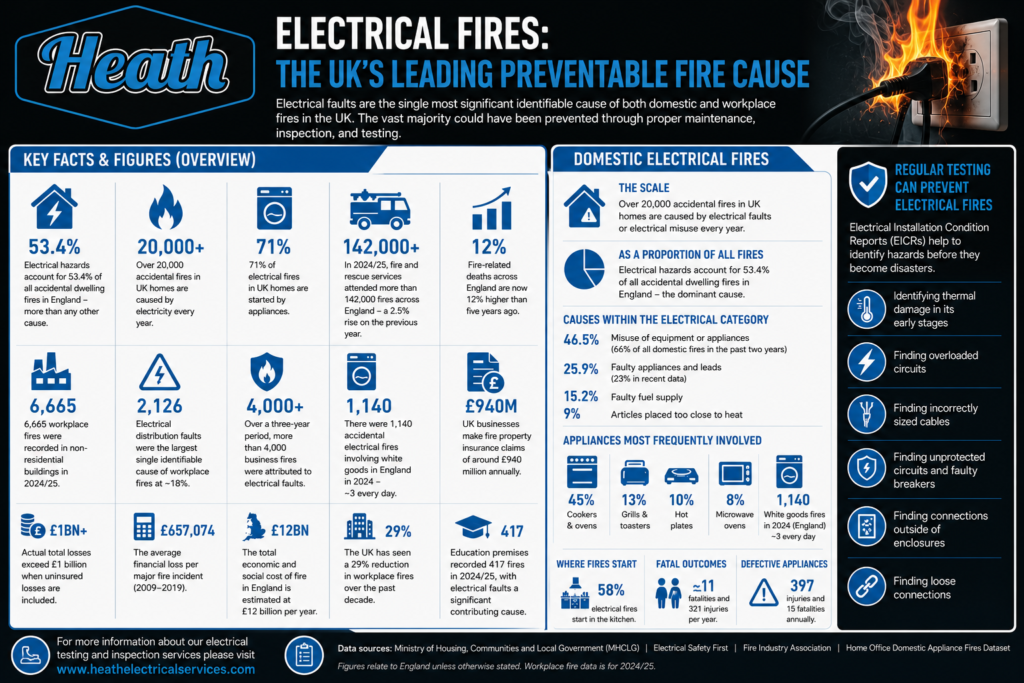
Electrical fire risks are more common than many people realise:
- – Electrical hazards account for 53.4% of accidental dwelling fires in England.
- – More than 20,000 accidental fires in UK homes are caused by electrical faults or misuse every year.
- – Approximately 71% of electrical fires in homes involve appliances.
- – Around 58% of electrical fires start in the kitchen.
- – Over 6,600 workplace fires were recorded in non-residential buildings during 2024/25.
- – Electrical distribution faults are the largest identifiable cause of workplace fires.
- – More than 1,100 electrical fires involving white goods occur annually in England.
- – Fire-related losses exceed £1 billion each year when uninsured losses are included.
These figures highlight why electrical safety should be a priority for homeowners, landlords, businesses, schools and public sector organisations alike.
What Causes Electrical Fires?
Electrical fires can occur for various reasons, but most are linked to faults, damage or misuse.
Faulty Appliances
Household appliances are responsible for the majority of electrical fires. Washing machines, tumble dryers, dishwashers and other white goods can become dangerous if components wear out or develop electrical faults.
Regular maintenance and replacing ageing appliances can help reduce the risk.
Damaged Cables and Plugs
Frayed wires, cracked plugs and damaged extension leads can all create fire hazards. Electrical equipment should be checked regularly and any damaged items should be repaired or replaced immediately.
Overloaded Sockets
Plugging too many devices into a single socket or extension lead can cause overheating. This is particularly dangerous when several high-powered appliances are used at the same time.
Faulty Wiring and Electrical Installations
Electrical systems naturally deteriorate over time. Loose connections, ageing wiring and faulty circuit protection can all increase the likelihood of overheating and electrical fires if left unchecked.
Misuse of Equipment
Leaving appliances running unattended, blocking ventilation openings or using equipment incorrectly can also increase the risk of fire.
Where Do Electrical Fires Usually Start?
The kitchen is the most common location for electrical fires, accounting for around 58% of incidents. With cookers, ovens, kettles, microwaves and other appliances used daily, it is often the area of the home where electrical demand is highest.
Cookers and ovens alone are involved in nearly half of appliance-related electrical fires, making them one of the biggest fire risks in domestic properties.
Workplaces, schools and commercial buildings can also be vulnerable, particularly where electrical equipment is heavily used or poorly maintained.
The Impact of Electrical Fires
The consequences of an electrical fire can be severe.
For homeowners, a fire can result in property damage, disruption and the loss of treasured possessions. For businesses and schools, the impact can include operational downtime, costly repairs and disruption to services.
Beyond the financial cost, electrical fires can also cause serious injuries and, in some cases, fatalities.
How to Prevent Electrical Fires
The good news is that many electrical fires can be prevented through simple proactive measures.
Arrange Regular Electrical Inspections
One of the most effective ways to identify hidden electrical hazards is through professional electrical inspections and testing.
An Electrical Installation Condition Report (EICR) can help identify:
- – Faulty wiring
- – Loose connections
- – Overloaded circuits
- – Damaged electrical components
- – Potential fire risks
Regular inspections are particularly important for businesses, schools, landlords and older properties.
Check Appliances Regularly
Look out for warning signs such as:
- – Burn marks
- – Unusual smells
- – Damaged cables
- – Cracked plugs
- – Frequent tripping of circuit breakers
Any appliance showing signs of damage should be removed from use until it has been professionally assessed.
Avoid Overloading Sockets
Use extension leads responsibly and avoid connecting multiple high-powered appliances to the same outlet. If circuits frequently trip, it may indicate an underlying electrical issue that requires attention.
Maintain Electrical Equipment
Cleaning appliance filters, removing dust from vents and following manufacturer servicing recommendations can help prevent overheating and equipment failure.
Promote Electrical Safety Awareness
In workplaces and schools, staff should know how to recognise electrical hazards and report faults quickly. Encouraging good electrical safety practices can help prevent small issues from developing into serious incidents.
Protect Your Property Through Prevention
Electrical fires remain one of the UK’s leading causes of preventable fires, yet many incidents could be avoided through regular testing, maintenance and safe electrical practices.
Whether you are responsible for a family home, workplace, school or commercial property, taking a proactive approach to electrical safety can significantly reduce the risk of fire and help protect people, property and valuable assets.
When it comes to electrical fires, prevention is always safer, simpler and far less costly than dealing with the aftermath.
Electrical fires often develop from faults that go unnoticed until it’s too late. Regular inspections and proactive maintenance can help identify issues early, giving you confidence that your property, people and assets are protected.
If you’d like advice on electrical safety, EICRs or electrical inspections for your home, school or business, get in touch with Heath Electrical to discuss how we can help.